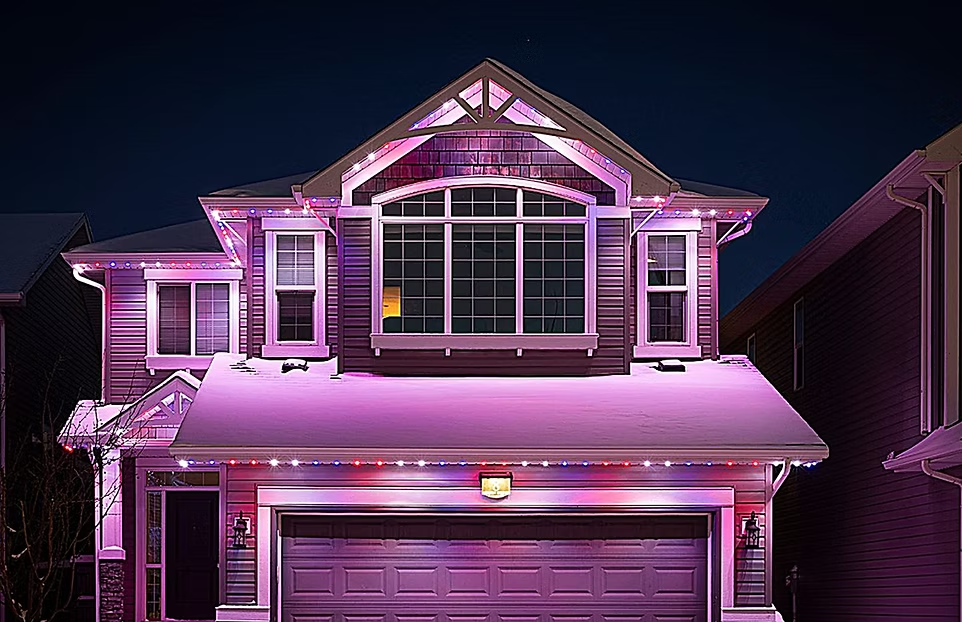
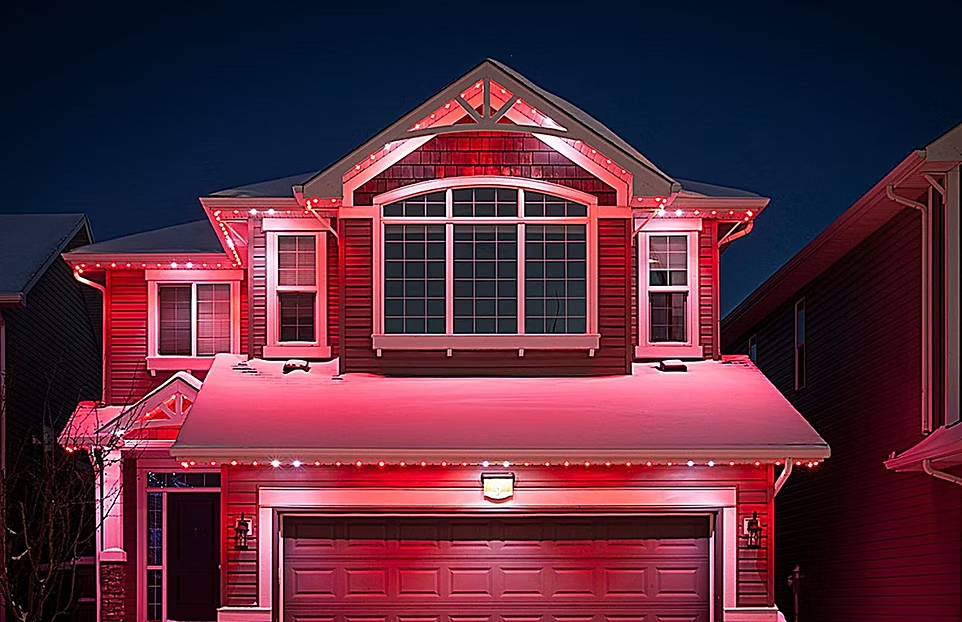
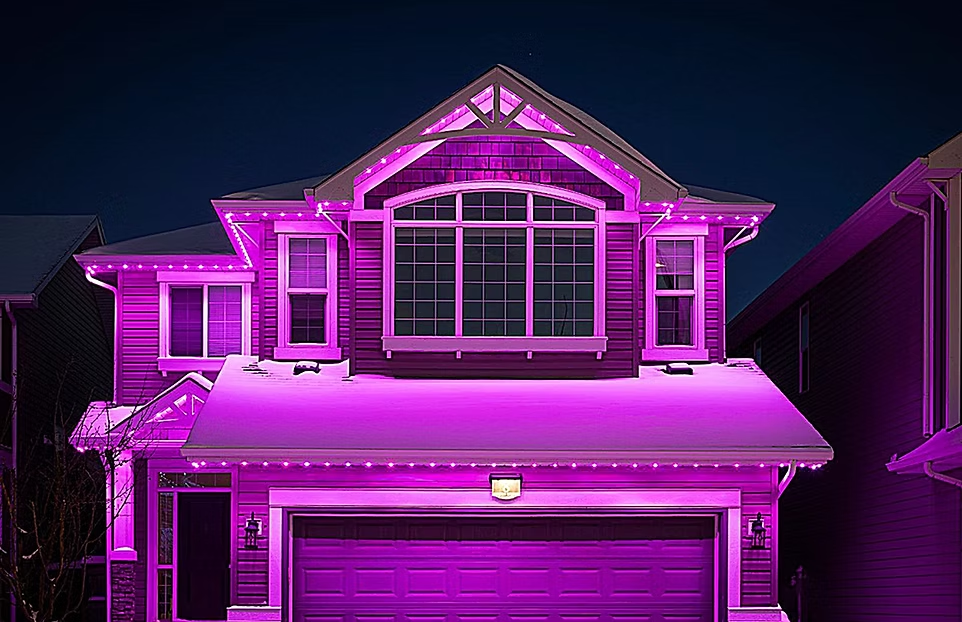
Outdoor Lighting in New Lenox
New Lenox is about as close to a hometown market as we have. Our base is in Manhattan, roughly ten minutes south, so DJ is often through New Lenox twice in a week without planning to be. If you'd rather have someone walk the property with you on a weekday evening than get slotted in three weeks out, that proximity is the whole advantage.
Much of the housing stock here is newer than what we work on a few towns over. Wide lots, side-load garages, farmhouse and transitional elevations, and landscaping that's anywhere from two to fifteen years old. All of that changes how a property should be lit.
Lighting a House Before the Trees Catch Up
On an established lot, the trees do half the work. On a newer New Lenox lot they can't yet — a twelve-foot maple lit from the base is a shrub with a spotlight on it.
So the weight of the design shifts onto what's already substantial: the house, the hardscape, and the beds. Grazing light across a stone water table, defining the gables, edging a paver walk, washing the arborvitae along the property line — that will make a five-year-old yard look finished. Then as the canopy fills in, we add to the system instead of rebuilding it.
Farmhouse and Transitional Elevations
The elevations going up around New Lenox carry more vertical texture than the brick colonials we light elsewhere. Board-and-batten, mixed siding, standing-seam accent roofs, black window frames.
Vertical siding wants a narrow beam set close to the wall, so the battens throw their own shadow lines. Smooth siding wants the opposite — a wider spread set farther back, or it turns into a row of bright triangles. We bring multiple beam spreads to the design visit and test them on your house after dark before anything gets set.
Color temperature is the other call. Warm white flatters stone and warm-toned siding. On a white-and-black farmhouse palette we'll often step slightly cooler so the white reads clean instead of yellow. You'll see the two side by side on your own wall.
Driveways, Entries, and the Walk to the Door
Newer subdivisions tend to have long front approaches and side-load garages, which leaves a lot of dark pavement between where a guest parks and where they knock.
We light that sequence on purpose: low-glare fixtures along the drive edge, a step up in brightness at the front walk, and the entry as the brightest point so the eye knows where to go. House numbers get their own fixture. If a delivery driver or an ambulance can't read your address at night, nothing else in the design matters as much.
A System Built to Be Added To
Most New Lenox projects we do arrive in stages — front elevation this spring, the backyard once the patio goes in, the roofline before the holidays.
So we size the transformer with spare capacity, leave pull points at the corners of the house, and document the zone layout, which means phase two doesn't involve digging up phase one. Planning for it from day one costs less than three separate installs.